
Share this
For shippers looking to optimize operations, transportation management systems (TMS) are often positioned as the answer. And while a TMS can help improve supply chain visibility, carrier communication, and freight procurement, it’s not a one-size-fits-all solution. Legacy TMS implementations can take 12 to 18 months. And even then, many organizations never achieve full adoption. Meanwhile, modern TMS providers can have shippers operational in 90 days.
This article covers why TMS implementations fail, what common adoption problems look like, and why a modern managed transportation system may offer a more reliable path to results.
The TMS Implementation Problem
TMS implementations fail for several reasons, and when shippers aren’t prepared for the challenges, they can find themselves 12 to 18 months into a legacy deployment with little to show for it. But it's not just budget overruns and low adoption across teams that lead to issues.
Root Cause #1: The Software-Only Model
A TMS offers a lot for business owners, including automation, real-time data, and centralized planning. But it’s still just software. And software alone doesn’t produce outcomes. Without the right people and processes in place, a TMS can be misused and mismanaged, delivering only a sliver of its potential value. Proper usage of a TMS requires team training, change management, and ongoing support.
Root Cause #2: The Team You Need to Run It
Some shippers adopt a TMS expecting it to reduce the size of, or even replace, their transportation team. The reality is that running a TMS effectively requires a dedicated staff. Even if you have an AI-powered transportation management system, you still need a team handling data and operations to make sure that everything is running properly. This means having to pay your team’s salary and benefits, which contributes to what we call the transportation tax—the money required to run in-house freight transportation.
Root Cause #3: Integration Debt
A TMS isn’t always just a TMS. Software tends to perform best when it’s connected to other specialized tools. So buying a TMS may lead to additional software investments—ERP, WMS, yard management systems, carrier portals, and so on. There is always new software that might improve your operations, or a higher subscription tier that you might think is worth paying for due to the features it unlocks.
Root Cause #4: No Accountability for Results
Many software vendors do not have performance service level agreements (SLAs). In other words, they are under no contractual obligation to improve your operations. There are no guarantees and no promises.
What Works Instead: Full-Stack Deployment and Operating Partner
These TMS adoption problems follow a recognizable pattern: Freight shippers try to improve their in-house freight transportation by offloading aspects of their operations to software. This makes sense, but better results could be gained by handing off some of your operations to a managed transportation team instead.
By working with managed transportation, you can rely on another team to deploy the technology, run daily operations, and commit to measurable results under agreed-upon KPIs. Best of all, this occurs on a compressed timeline. Rather than the 12 to 18 months associated with legacy TMS implementation, managed transportation providers can have you operational within 90 days.
Rescuing a Stalled TMS Project
When to Run Parallel
If your legacy TMS project has stalled, it might make sense to run parallel. That means working to implement the new system while maintaining the old one. This helps if you’re stalling due to concerns with potential bugs or gaps with the new system, allowing you to run a short test before going live. Part of this process can include controlled tests of the new TMS while handling the majority of your operations with your established system.
When to Replace Entirely
If the implementation isn’t delivering value, replacing it with a managed transportation system—where the technology, team, and processes come as a package—may get your operation back on track more quickly.
Frequently Asked Questions About TMS Implementation Failure
How Long Should a TMS Implementation Really Take?
Some legacy TMS systems can take upwards of 18 months to implement, depending on the size and complexity of the business. A modern TMS solution like ShipperGuide can get up and running in a matter of weeks.
Can I Save a TMS Project That’s Already Stalled?
Yes, you can save a TMS project that’s already stalled. But expect it to require tough decisions that prioritize long-term results over short-term comfort.
What’s the Difference Between Buying a TMS and Hiring a Full-Stack Provider?
In some cases, buying a TMS means that your team must learn how to use the software on their own. A full-stack provider not only delivers the technology, but also logistics expertise and operational execution.
Skip the 18-Month TMS Project
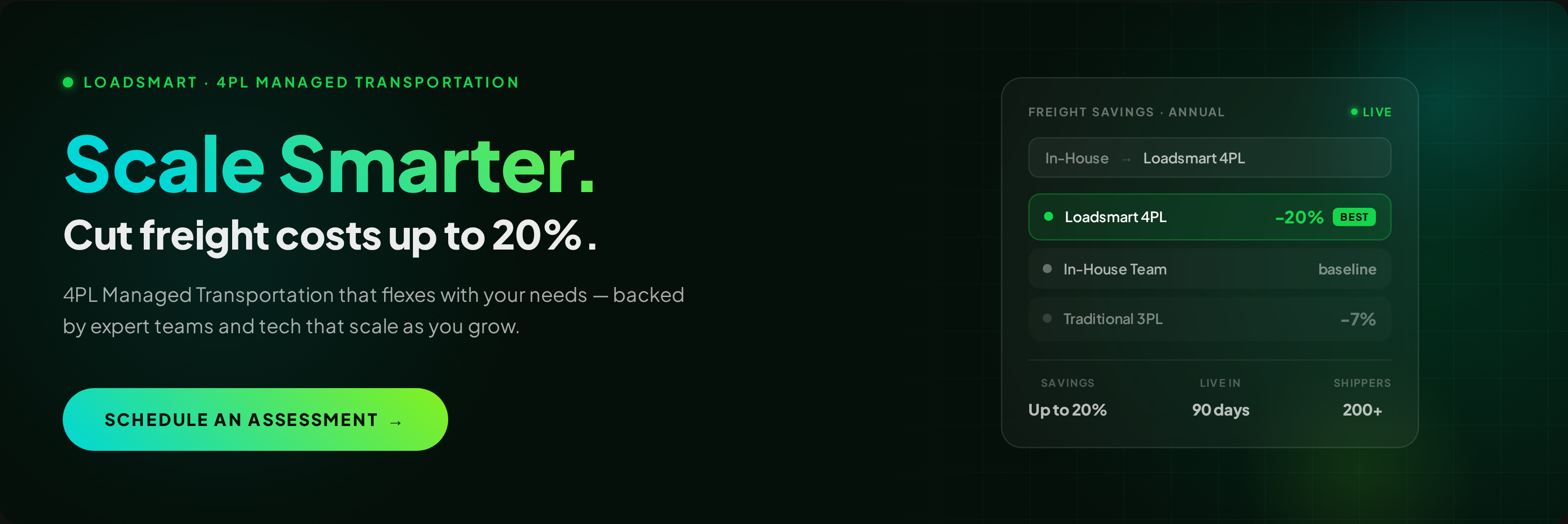
Loadsmart’s managed transportation team is ready to help you save on freight costs.
Schedule a free assessment today.