
Share this
by Hal Koss
Key Takeaways
- Monitoring shows what a shipment's status means, not just where the load sits.
- ETA thresholds, exception workflows, and carrier compliance drive proactive monitoring.
- ShipperGuide unifies planning, execution, and monitoring in one TMS.
- Proactive monitoring cuts detention fees, missed appointments, and manual tracking.
Freight teams often spot issues only after a shipment slips off plan. By then, options get expensive and customer conversations get harder. ShipperGuide's TMS centralizes supply chain monitoring alongside planning and execution, giving teams ETA thresholds, exception alerts, and real-time shipment tracking in one platform so they can act before small delays turn into operational problems.
What Is Supply Chain Monitoring?
Supply chain monitoring is the ongoing process of tracking active shipments and measuring their progress against the plan. It goes far beyond basic shipment tracking.
Supply Chain Monitoring vs. Freight Tracking
Tracking tells a team where a shipment is. Monitoring shows what that status means for the operation. That difference matters because location data alone rarely answers the more important questions: Is action required? And if so, whose responsibility is it to act? Strong freight tracking gives teams useful inputs, but monitoring connects those inputs to planned outcomes. This is where visibility starts turning into execution. For more on how freight visibility fits into the broader tracking picture, see what freight visibility means for transportation teams.
How Does Proactive Supply Chain Monitoring Work?
Proactive monitoring works by turning live shipment activity into early warning signals. This gives teams time to intervene before a delay becomes a disruption.
ETA Thresholds Add Specificity
ETA thresholds give teams a practical way to judge movement against the plan. A shipment is not simply "in transit." It is early, on-time, or late. This makes load tracking more useful for daily execution. Teams no longer wait for a missed delivery to confirm a problem. They see the gap forming and decide what needs attention first.
Exception Workflows Define What Happens When a Load Goes Off Plan
A late signal only helps if the team knows what happens next. Strong exception workflows turn that signal into a defined response inside your freight execution software, so the right team member is notified, reviews the load, and takes action. That action may involve updating the customer, checking the carrier's latest status, or adjusting the plan internally. A late load should trigger movement, not another round of searching.
Carrier Tracking Compliance Makes Alerts Reliable
Even the best monitoring setup depends on consistent carrier participation. If carriers miss check calls, fail to activate tracking links, or provide incomplete updates, visibility breaks down at moments teams need it most. Shippers need clear expectations with carriers and a simple way to spot gaps. Good transport monitoring depends on clean, timely inputs before any alert becomes useful.
How Does Supply Chain Monitoring Reduce Detention and Delivery Exceptions?
Monitoring matters most when it changes outcomes, not just visibility. Its value becomes clear when teams use earlier signals to protect service and spend, and tracking the right freight visibility KPIs makes that improvement measurable.
Early Alerts Prevent Detention, Missed Appointments, and Expedited Freight Charges
Small timing issues get expensive when teams find them too late. A missed appointment often leads to detention fees, rescheduling pressure, or a rushed recovery plan. Proactive monitoring gives teams earlier notice when a load starts moving outside the plan, helping them adjust appointment timing, contact the right people, or avoid using expedited freight as the default fix.
Milestone Data Reduces Disputes and Repeat Exceptions
Carrier conversations get sharper when teams work from documented milestones rather than memory or inbox trails. Check-ins and check-outs at pickup and delivery create a timestamped record of what happened at each stop. That record helps shippers manage performance with less friction, and it feeds the transportation analytics teams use to identify patterns across lanes or partners for future carrier decisions.
How ShipperGuide Enables Proactive Supply Chain Monitoring
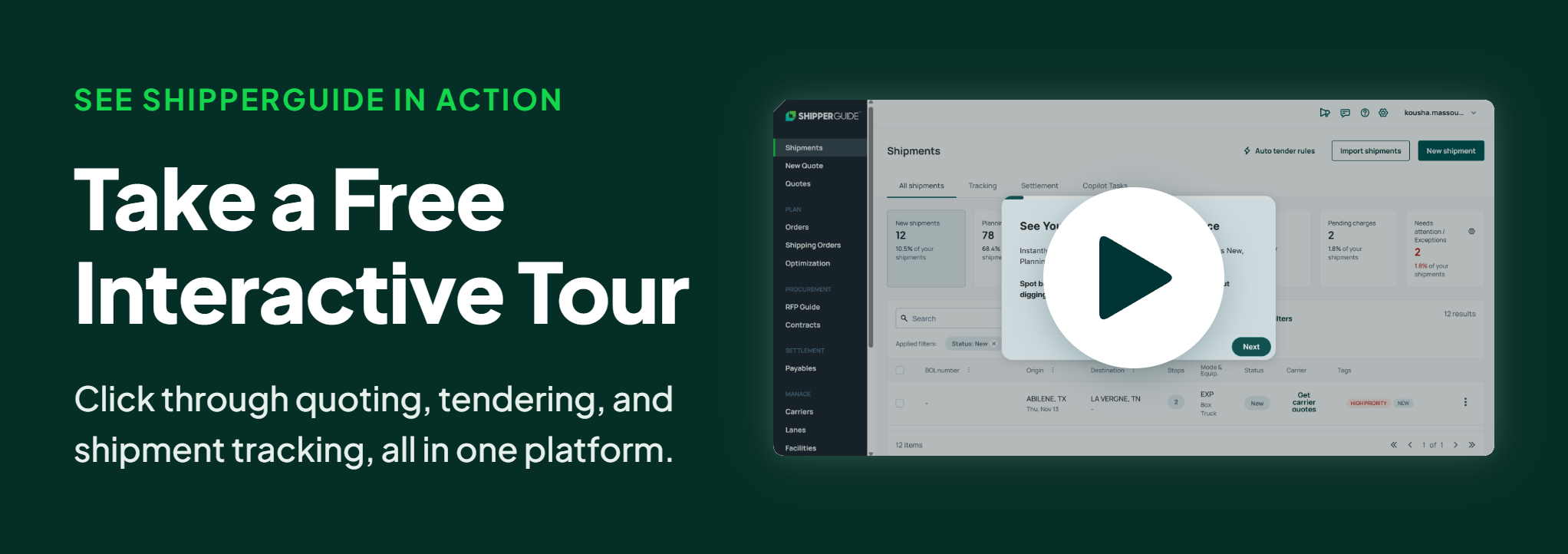
ShipperGuide centralizes freight planning, execution, and monitoring in one TMS, giving teams proactive control over active shipments without manual check calls or disconnected visibility tools. Carrier API integrations surface real-time status and ETA data automatically, with exception alerts routing to the right team member before a delay escalates.
- ETA thresholds flag loads trending off schedule so teams act before appointments are missed, not after.
- Exception alerts trigger automatically and route to the right person, turning signals into defined next steps.
- Milestone data from pickup through delivery builds a factual performance record for carrier reviews and dispute resolution.
- Planning and monitoring live in the same platform, so freight decisions reflect what is actually happening across active loads.
Autonomous Exception Resolution: How AI Responds When Monitoring Signals Delays
Monitoring tells a team when a load drifts off plan. The next step is deciding what to do about it, and this is where AI moves from alerting to acting. When ETA drift, a missed milestone, or extended carrier silence crosses a shipper-defined threshold, ShipperGuide diagnoses the disruption by comparing the latest signals against the shipment plan rather than simply flagging it for a person to chase. This is the foundation of automated freight management within an AI TMS.
From there, the system assembles what a dispatcher needs to act and routes the exception to them with that context in hand. Shippers set the boundaries: which signals trigger escalation and what counts as a genuine exception versus normal variance. Cases that cross those thresholds escalate with context already assembled, so the team acts on a decision instead of assembling one.
See how ShipperGuide's proactive monitoring tools give your freight team earlier signals, fewer exceptions, and more consistent delivery performance.

Frequently Asked Questions
What Is the Difference Between Supply Chain Monitoring and Shipment Tracking?
Shipment tracking tells you where a load is or what status it has reached, while supply chain monitoring adds operational context by showing whether that movement supports the plan and when the team needs to act. Monitoring connects live shipment data to planned outcomes, carrier compliance expectations, and exception workflows that tell the team what happens next when something goes off course.
How Does Supply Chain Monitoring Reduce Freight Costs?
Supply chain monitoring reduces freight costs by giving teams more time to respond when loads drift off plan, which helps avoid missed appointments, detention risk, and unnecessary expedited freight charges. Milestone data also supports carrier performance conversations, making it easier to identify cost drivers and address them before they compound across lanes.
How Does ShipperGuide Support Proactive Freight Monitoring?
ShipperGuide's TMS connects carrier tracking data to ETA thresholds, exception workflows, and milestone records in one platform, giving teams real-time signals without manual check calls. Alerts route to the right person automatically, appointments are visible alongside live tracking, and carrier compliance gaps surface before they affect service — giving freight teams time to act instead of react.