
Share this
Private equity firms are under pressure to create value quickly, and freight spend is often one of the largest operation cost categories. Managed transportation (MT) offers a structured way to reduce costs, standardize operations, and improve service levels without building an internal logistics team.
This guide walks you through the benefits that managed transportation can bring to PE firms.
Managed Transportation Value Creation Across the Investment Lifecycle
Managed transportation delivers value at every stage of the investment cycle, from initial diligence to exit preparation.
Due Diligence
During diligence, MT providers can assess freight spend, inefficiencies, and current contract obligations. This allows providers of portfolio company logistics to quickly identify cost-saving opportunities and quantify savings potential before acquisition.
100-Day Plan
In the first 100 days, MT focuses on improving visibility, immediate savings, and operational stabilization. The main tasks during this period are related to the standardization of processes and the introduction of tracking.
Value Creation (Years 1-3)
Over the holding period, managed transportation can drive continuous optimization through improved routing, load consolidation, and carrier strategy. This stage of the investment lifecycle delivers the main cost reductions and operational scalability.
Exit Preparation
As the firm approaches exit, MT provides clean transportation data and consistent performance metrics. This strengthens valuation and demonstrates operational maturity to potential buyers.
Managed Transportation for Different Portfolio Company Scenarios
Managed transportation adapts well to different investment strategies and portfolio companies' logistics needs.
Carve-Outs
MT helps standalone businesses establish transportation capabilities after separation from their parent company. This leads to immediate access to structure, systems, and carrier networks that the carved-out entity doesn’t have on its own.
Platform Bolt-On
MT standardizes transportation across entities as a platform company integrates bolt-on acquisitions.
Turnarounds
Underperforming businesses can benefit from managed transportation by gaining visibility into where cost and service are breaking down, then course correcting.
Growth Equity
For high-growth companies, MT scales logistics alongside the business. Shipment volumes can increase without adding headcount, since it’s the provider that is absorbing planning, execution and carrier management workload.
Building the Business Case for Your Investment Committee
To secure investment committee approval, the case for managed transportation needs to be specific and measurable.
A strong IC presentation includes a financial model with projected savings by category (carrier rates, optimization, freight audit, accessorials, headcount), implementation costs, and a timeline to value. An EBITDA bridge should connect each savings category directly to margin improvement.
Risk mitigation should also be addressed. Phased implementation reduces service disruption, parallel operations protect continuity during transition, and contractual KPIs hold the provider accountable for performance.
Frequently Asked Questions About Managed Transportation and Private Equity
If you’re searching for managed transportation for a private equity company, the answers to these common questions can help you.
How Fast Can Managed Transportation Impact EBITDA for a Portfolio Company?
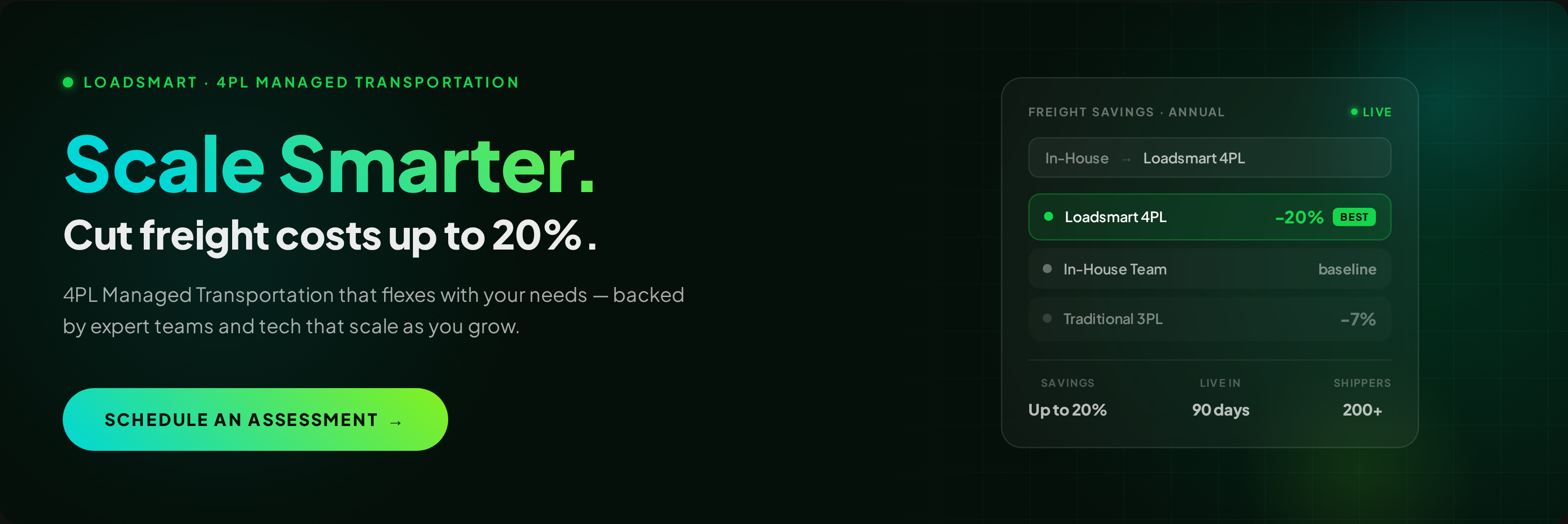
MT can deliver savings within the first 90 days. The full impact compounds over the first year as optimization, carrier strategy, and freight audit recovery mature.
Can Managed Transportation Scale Across Multiple Portfolio Companies?
Yes, MT uses a repeatable framework that can be deployed across portfolio companies. Each engagement is tailored to the company, but the implementation model and technology are consistent.
What Reporting Do Operating Partners Receive?
Operating partners receive reporting on savings, service levels, freight spend, and other important KPIs. Thanks to these insights, organizations gain better visibility and can have ongoing optimization of their logistics.
Which Managed Transportation Model Preserves the Most Exit Optionality?
MT engagements structured with data ownership retained by the portfolio, standardized processes, and clear performance metrics are the easiest to transition at exit.
Accelerate Value Creation With a 90-Day MT Program
Loadsmart’s managed transportation solutions help private equity firms unlock savings, improve efficiency, and drive EBITDA growth within months. Stabilize operations and capture quick wins with our 90-day MT program.