
Share this
Transportation decisions used to sit with one team. That’s no longer the case. Cost pressure, system complexity, and service expectations have pulled multiple leaders into the same conversation.
This guide breaks down how a modern managed transportation buying committee evaluates options, aligns internally, and moves forward without friction. Start with your role or read through to see how the full decision comes together.
Why Transportation Has Become a Full-Committee Decision
Transportation now touches cost, service, systems, and risk all at once. No single function owns all of it. Finance sees margin impact, operations sees execution gaps, and IT sees integration risk. That’s why these decisions no longer sit in one team. In 2026, transportation performance is now part of board conversations tied to EBITDA, customer experience, and resilience.
The Four Stakeholders in Every Mid-Market MT Decision
Every managed transportation decision follows the same pattern. Four roles shape the outcome, and each brings a different view of risk, value, and control. When those priorities align, decisions move. When they don’t, things stall.
- CFO/CEO (Primary Sponsor): Focused on cost reduction, headcount impact, and clear P&L improvement. They back the decision when the financial case holds.
- VP Supply Chain/Ops (Operational Sponsor): Prioritizes reliability and accountability. This leader pushes for a model where one partner owns execution end-to-end.
- VP Transportation (Functional Owner): Owns the team and daily execution. This role evaluates how the model affects workflows, performance, and control.
- IT (Architecture Approver): Reviews integration, security, and data flow. They sign off when the solution fits cleanly into the existing tech stack.
CEOs and CFOs: The Financial Case
Transportation has become a margin conversation and a clear ROI focus. Freight spend is visible, but the total cost of running transportation isn’t. Internal headcount, manual work, TMS fees, invoice disputes, and daily exceptions all add up and pull teams away from higher-value work.
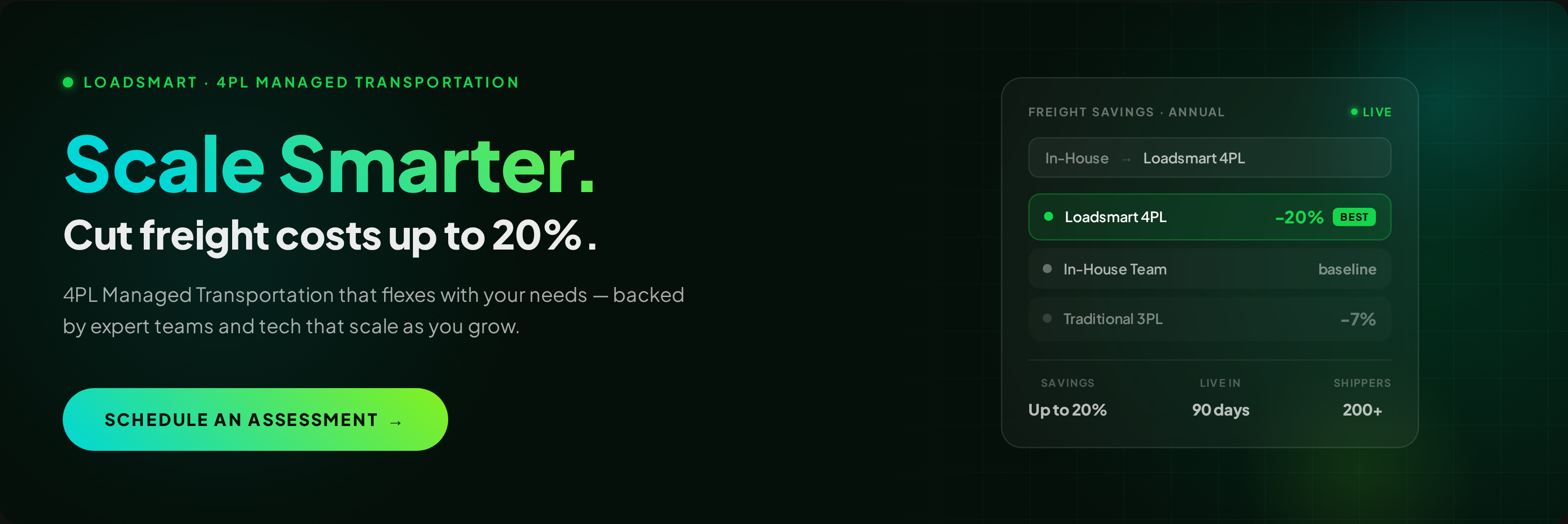
For mid-market companies, the strongest managed transportation business case comes from these areas: lower freight costs, leaner internal execution, reduced technology spend, and meaningful transportation OpEx reduction. A well-structured engagement should show a path up to 20% freight cost reduction, fewer FTEs tied to daily execution, and no separate TMS ownership burden.
The contract is just as important as the savings model. CFOs should look for fixed annual contract value, KPI credit clauses, a defined 90-day deployment plan, clean data portability, and practical exit terms. A strong proposal explains the upside, and a strong contract protects it.
The board-ready case should stay simple. Start with current freight spend, then layer in expected savings, headcount impact, and eliminated system costs. The outcome should translate directly into EBITDA improvement with a clear payback period.
VPs of Supply Chain: The Operational Case
Supply chain leaders are driving these decisions because they feel the gaps every day. Missed pickups, inconsistent carrier performance, and disconnected systems aren’t isolated issues. Over time, they erode service levels and put pressure on the rest of the network.
Managed transportation introduces a simpler operating model. One contract, one accountable partner, one KPI scorecard. Instead of coordinating across brokers, carriers, and internal teams, responsibility sits in one place. When something breaks, there’s no question about who owns it.
This shift only works when responsibilities are clearly defined. Core decisions stay in-house, including network design, customer relationships, and long-term strategy. Execution moves to the provider, covering day-to-day planning, carrier management, and the technology used to run it.
The transition matters as much as the model itself. Teams need a clear path forward, not uncertainty. Strong implementations reallocate talent toward higher-value work, set expectations early, and communicate what changes and what doesn’t. When that’s handled well, the model settles quickly and performance follows.
VPs of Transportation: The Role-Evolution Case
This is where most deals stall. It often sounds like a loss of control, when in reality it’s a shift in responsibility.
Today, a large part of the role is tied to execution. Managing tenders, chasing shipment updates, resolving exceptions, and working through carrier issues take up most of the day. Managed transportation moves that work to the provider, along with the systems and teams required to run it consistently.
What stays with you is what drives performance. Carrier strategy, network decisions, service standards, and how the operation runs overall remain in your control. With execution off your plate, you have more time and better data to focus on those decisions.
The role becomes more strategic and more visible. If the conversation hasn’t started yet, lead it and frame it around performance and control.
IT Leaders: The Architecture Case
The IT role here is straightforward. You’re approving the architecture, not running the project.
The focus is on how the provider fits into your existing stack, which sits at the center of IT managed transportation integration. That starts with core integrations. ERP connectivity, WMS and YMS touchpoints, and carrier connections through EDI or APIs all need to work without creating workarounds. Data flow matters just as much, with real-time sync increasingly expected instead of batch updates.
Modern managed transportation providers deploy faster because much of this is already built. Pre-configured integrations and standardized frameworks reduce the need for custom development. That lightens the lift on your team. Instead of building from scratch, you’re validating, testing, and ensuring alignment with internal standards.
Two areas deserve close attention. Data ownership should stay clear from day one, with full access and export rights if the contract ends. Implementation should follow a defined plan, typically across a 90-day timeline with structured sprints and minimal lift from your team.
How the Committee Aligns (And Where It Usually Breaks Down)
Alignment rarely fails on logic. It breaks on interpretation.
The same decision lands differently across the group. The CFO pushes for cost reduction, while the VP of Transportation hears job risk. The VP of Supply Chain wants one accountable partner, while IT focuses on integration and security risk. All are valid, but they move at different speeds.
There’s also pressure to move quickly. Every team wants faster execution, but speed only holds when the contract backs it with clear terms and timelines. The teams that move forward don’t avoid these tensions. They surface them early and align on key priorities and success metrics before the decision is made.
Frequently Asked Questions About the Buying Committee on Managed Transportation
As the committee moves closer to a decision, a few questions tend to come up across teams. Here are the most common ones.
Who Should Own the RFP Internally?
The VP of Supply Chain should lead the RFP, with input from finance, transportation, and IT. One owner keeps it moving and avoids conflicting priorities.
How Do We Align the Committee if the VP of Transportation Is Skeptical?
Start with role clarity, not cost. Show what stays in their control and what shifts. Bring them into early discussions so they shape the approach, rather than react to it.
What’s the Minimum Set of KPIs Every Contract Should Include?
Focus on on-time pickup and delivery, cost per load, tender acceptance, and fill rate. Keep it tight, measurable, and tied directly to service and cost outcomes.
How Long Does the Full Committee Decision Typically Take?
Most decisions take 60 to 90 days once stakeholders are engaged. Alignment drives speed. When roles are clear and priorities agreed, timelines move much faster.
Can We Pilot Before Committing to a Full Deployment?
Some providers offer limited pilots, but most mid-market engagements move straight to rollout. A defined 90-day deployment with clear milestones gives faster, more reliable results than small-scale tests.
Start the Conversation With a Free Transportation Assessment
Most teams don’t need another presentation. They need clarity on where they stand today and what changes will move the needle.
A transportation assessment gives you that baseline. It highlights cost gaps, operational inefficiencies, and quick wins without committing to a full engagement.