
Share this
by Hal Koss
Key Takeaways
- An AI TMS shifts freight from manual rules to automation.
- ML optimizes routing, carrier choice, and load building.
- Automation cuts repetitive, manual work for shippers.
- People move from execution to supervising exceptions.
Transportation management is shifting from manual, rules-based execution to AI-assisted operations. Modern TMS platforms use machine learning, automation, and data analysis to help shippers benchmark rates, automate tendering, optimize load plans, and monitor carrier performance, reducing manual workload and improving freight outcomes.
Today, an AI TMS helps shippers reduce cost per load through automated spend analysis, ML-based carrier predictions, and AI-driven bulk task execution.
Understanding Transportation Management Systems (TMS): The Foundation
Current AI tech in transportation management improves costs, service standards, and response time. But, how does it change or improve on existing or traditional TMS systems?
Core TMS Functionality and Purpose
This system is central to visibility. Transportation management systems (TMS) assist in the coordination of freight execution, from start to finish, alongside facilitating freight-related audits.
Using these systems, management already watched multi-carrier rates, trends, and selections. They use its insights by applying new routing and consolidating shipments.
Traditional TMS Limitations in Modern Logistics
Traditionally, TMS limits are primarily its lack of automation to live network conditions. Dealing with variables like traffic, weather, routes, and congestion in the yard falls in the lap of talent.
The Evolution Toward Intelligent Systems
Instead, modern technology can intervene on their behalf. Using machine learning, pattern recognition, and natural language, an AI-powered TMS shifts easily from rule-based reasoning to adaptive refinements of existing strategies and settings.
From rigid to responsive, the capacity for self-driven algorithmic learning and routing actions performed by AI in real-time has quietly already transformed the transportation management industry.
How Does Automated Freight Management Work in an AI TMS?
Whether or not assistance is automated or only advisory, the system gains continuous feedback loops that move swiftly between planning, action, and evaluation.
This increases optimizations, meaning more on-time deliveries, fewer miles driven, lower fuel consumption, and no need for inconsistent manual interventions.
Machine Learning for Route Optimization
Optimization algorithms analyze shipping orders against constraints like geography, stop sequences, and date windows to suggest consolidated load plans. ShipperGuide's planning optimization identifies multi-stop consolidation opportunities that reduce total mileage, with customers seeing 50%+ mileage savings on optimized loads.
Predictive Analytics for Demand Forecasting
AI-powered analytics help shippers understand their freight spend patterns, identify lanes with consistent spot usage ready for contract conversion, and benchmark rates against market data, a process that relies on clean, accurate TMS data.
Natural Language Processing for Documentation
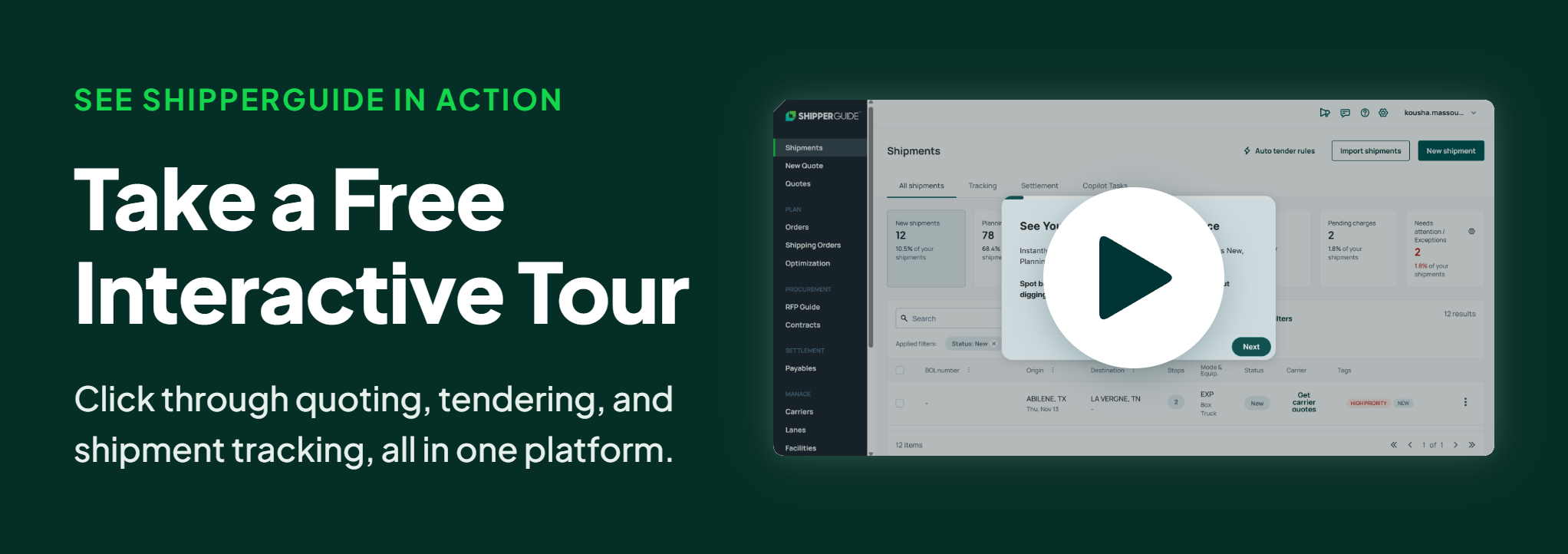
Natural language interfaces are emerging in TMS platforms. ShipperGuide's Copilot Tasks allows users to describe what they need done in plain language, and the AI executes bulk actions across shipments, including automating TMS documentation with AI.
What Manual Tasks Does AI Logistics Automation Eliminate in Transportation Management?
Through TMS implementation, AI can change daily operations by directing its own measurable impact on efficiency, costs, and streamlined workflows. For example, Scotts Miracle-Gro moved from antiquated, manual processes to automated shipping operations with ShipperGuide.
Dynamic Pricing and Rate Optimization
Using real-time and historical lane data, AI calculates capacity to recommend rates and maximize returns for freight overall.
Automated Carrier Selection and Scoring
Artificial intelligence also dynamically rates carrier performance data to detect opportunities to optimize load allocations, the same AI-driven carrier scoring freight brokers rely on. Predictive Maintenance and Delay Prevention
Machine learning allows AI agents to use sensor data in the prediction of service or equipment failures, raising uptime and lowering delays.
Smart Load Consolidation
Optimizations through AI TMS make lanes and loads more efficient, drastically cutting spend and emissions across sites.
How Does an AI TMS Handle Exceptions, and What Is the Human’s Role?
In the future, TMS systems with AI may become a deciding factor for whether small, new, or niche companies can compete in the transportation space.
Emerging AI Capabilities in Logistics
Already, AI shows real power at resolving exceptions, even at enterprise-level volume. Future advancements will look at quoting, fraud, compliance, and network planning.
Industry Adoption Trends and Timeline
- First phase: 70% of organizations have already opted for some form of AI feature within their current system.
- Second phase: a massive expansion into full automation, complex rating, and complete documentation.
- Third phase: AI helps plan, organize, and strategize high-level operational procedures that increase business results and avoid stagnation.
What Shippers Should Expect in the Next 5 Years
In the next few years, manual interventions will shrink.
AI will increasingly offer traditional TMS users an irresistible new ability: to "set and supervise" automated load consolidations, lane shifts, and operative adjustments rather than analyzing and executing them manually. In practice, that means autonomous AI execution with people stepping in only to handle exceptions.
How Does an AI TMS Detect and Resolve Freight Disruptions Automatically?
An AI TMS detects disruptions by continuously monitoring live signals like carrier tender rejections, GPS and ELD tracking, weather, traffic, and facility congestion, then resolves them by automatically rerouting, retendering, or reprioritizing loads before a delay spreads across the network.
Predictive models flag a likely late pickup or tender rejection early enough for the system to act, not just alert someone after the fact. The platform can retender to the next carrier in the routing guide, adjust appointments, and escalate only the exceptions that genuinely need a person, so small problems get corrected in real time instead of surfacing days later.
See What an AI-Native TMS Can Do for Your Operation
Watch for yourself whether your organization can get a competitive edge and better business outcomes through AI TMS implementation.
Schedule a ShipperGuide demo to see how the latest AI TMS features can work together in a single platform.

Frequently Asked Questions
What Is the Difference Between AI TMS and Traditional TMS?
A traditional TMS follows configured rules and requires manual intervention for decisions. An AI-powered TMS adds machine learning predictions (like tender rejection forecasting), automated analytics (like spend benchmarking), and natural-language task execution (like AI-driven bulk actions), helping teams make faster, more informed decisions while automating repetitive work.
Do I Need a Large Shipping Volume to Benefit from AI TMS?
Lower shipping volume doesn't mean lower effect on ROI from using AI in transportation management. Enterprise volume isn't necessary to benefit from "self-driving" AI TMS.
How Long Does It Take to Implement an AI-Powered TMS?
Core AI functions and features within a core TMS can take a few days to weeks or months to fully launch, but the length truly depends on the scope and requirements of the AI implementation.