
Share this
by Hal Koss
Key Takeaways
- Freight audit software verifies carrier invoices against shipment and rate records.
- Accessorials, detention, and corrected invoices drive most billing discrepancies.
- AI can flag overcharges and duplicate invoices before payment is approved.
- Native TMS audit reviews charges against the same operational shipment data.
Freight audit software exists because invoices often reflect more than the original transportation rate. Accessorials, detention, fuel adjustments, corrected invoices, and shipment exceptions can all affect the final amount billed by the carrier.
When that context lives across spreadsheets, emails, documents, and separate systems, invoice review becomes harder than matching one number to another. Teams need to know whether the invoice matches the shipment before they approve or dispute it.
What Is Freight Audit Software?
Freight audit software is a system used to review, validate, and prepare carrier invoices for payment by verifying that billed charges match the shipment, rate, and approval records behind them.
The software compares invoices against shipment records, contracted rates, approved accessorials, supporting documents, and internal business rules. Any mismatch can be flagged for review before approval.
Important Freight Audit Software Features
Strong freight audit software connects invoice review to the shipment, rate, approved charges, and payment workflow behind it.
Charge Validation
Charge validation compares invoice charges against contracted rates, booked rates, approved accessorials, and shipment records to identify discrepancies before payment.
Accessorial Rules Management
Accessorial charges often create discrepancies because they are added after booking and vary by shipment. Validation rules help teams verify whether detention, fuel surcharges, stop-off fees, and other accessorial charges match approved shipment activity.
Duplicate Invoice Detection
A rebilled invoice, corrected submission, or repeated carrier charge can create duplicate payment risk when audit depends on manual review. Automated detection helps identify those situations before payment approval.
Dispute Management Workflow
A structured dispute workflow helps teams flag discrepancies, document supporting information, communicate with carriers, and track resolution without relying on disconnected email threads.
Approval Thresholds
Approval thresholds allow teams to automatically clear small variances while focusing attention on invoices that create meaningful financial risk.
Spend Reporting and Analytics
Reporting capabilities should help teams identify recurring invoice issues, carrier-specific billing patterns, accessorial trends, and freight spend by lane, making it easier to uncover invoice leakage and the operational factors driving transportation costs.
Integration Capabilities
Integrations help audit teams access shipment records, financial data, supporting documents, and payment workflows without duplicate data entry or manual reconciliation.
Standalone Audit Software vs. TMS With Built-In Audit
The main difference is where invoice review gets its shipment context.
With standalone freight audit software, auditing happens in a separate system. Shipment records, rates, accessorials, documents, and invoices may need to be imported into the audit system first. This can work well for organizations with established transportation systems that want a dedicated freight audit and payment software layer.
A TMS with built-in audit starts from the shipment lifecycle itself. Since rates, shipments, charges, execution events, and invoices live in the same platform, teams can review discrepancies against the operational record behind them.
Instead of gathering information across systems, teams can review shipment history, approved charges, supporting documents, and invoices in the same workflow.
How Can AI Detect Freight Overcharges and Duplicate Invoices Before Payment?
AI detects freight overcharges by comparing every incoming charge against the shipment, contracted rate, and execution records already in the system, then flagging anything outside approved variance before it reaches payment.
Standalone, bolt-on audit tools usually start from a disconnected position. Rates, shipment data, and documents are imported through manual CSV uploads, and reconciliation runs against static snapshots that can fall out of date the moment a shipment changes.
An AI-native TMS works from one data foundation. Because quotes, execution documents, and invoices share the same record, the system can automatically cross-check billed charges against what actually happened on the load: the rate that was booked, the accessorials that were approved, and the delivery events on file. Overcharges surface as exceptions instead of slipping through as approved spend.
How Do You Choose the Right Freight Audit Software?
The best freight audit software depends on where invoice review needs to happen in your freight workflow.
When to Choose Standalone Software
If your team only needs a stronger audit layer on top of an existing transportation system, standalone freight audit software may be enough. Prioritize tools that can validate invoices, detect duplicates, manage disputes, and send clean payment data back to accounting.
When to Choose a TMS With Built-In Audit
If invoice review is slowed down by missing shipment records, disconnected rate data, manual document searches, or unclear charge history, a TMS with built-in freight audit is usually a better fit. Audit teams can review invoices against the same operational data used to quote, book, track, and settle the shipment. So the bigger the disconnection between execution data, charge history, supporting documents, and invoice review, the stronger the case for built-in audit.
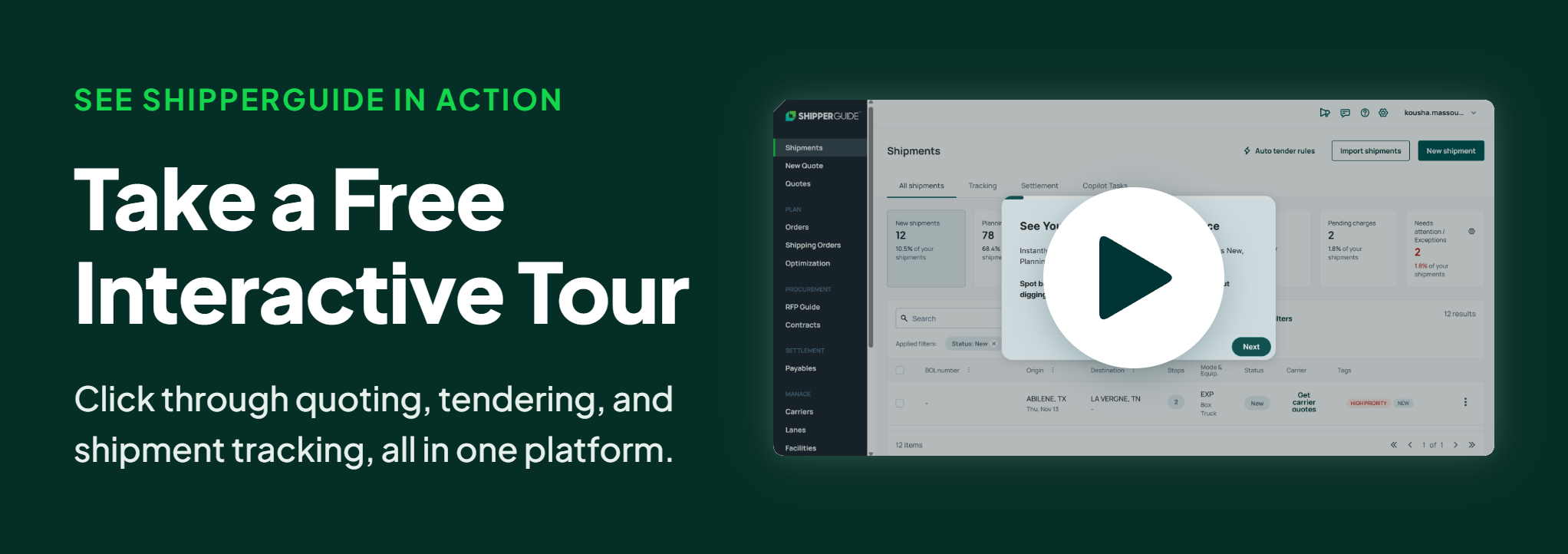
See Freight Audit Built Into Your TMS
Every invoice review comes back to the same question: does this charge match what actually happened during the shipment?
See how ShipperGuide connects freight invoice auditing to the full shipment lifecycle, so every billed charge can be checked against the operational record of the load it belongs to.

Frequently Asked Questions
How Much Does Freight Audit Software Cost?
There is no standard pricing model for freight audit software. Some platforms charge a monthly subscription, while others price by shipment, invoice, or transaction volume. Final cost usually reflects shipment volume, invoice volume, system integrations, and the level of automation required.
Does Freight Audit Software Replace a Freight Auditor?
Not entirely. The software can automate invoice matching, discrepancy detection, approval workflows, and other repetitive tasks, but someone still needs to review exceptions, resolve disputes, and decide how unusual charges should be handled.
Can Freight Audit Software Integrate With My ERP or Accounting System?
Most modern freight audit software platforms support integrations with ERP, accounting, and transportation systems. The key is confirming how invoice, payment, and financial data will move between systems, and whether the integration supports your existing approval and payment workflows.